The Rise and Triumph of the Modern Self
Cultural Amnesia, Expressive Individualism, and the Road to Sexual Revolution
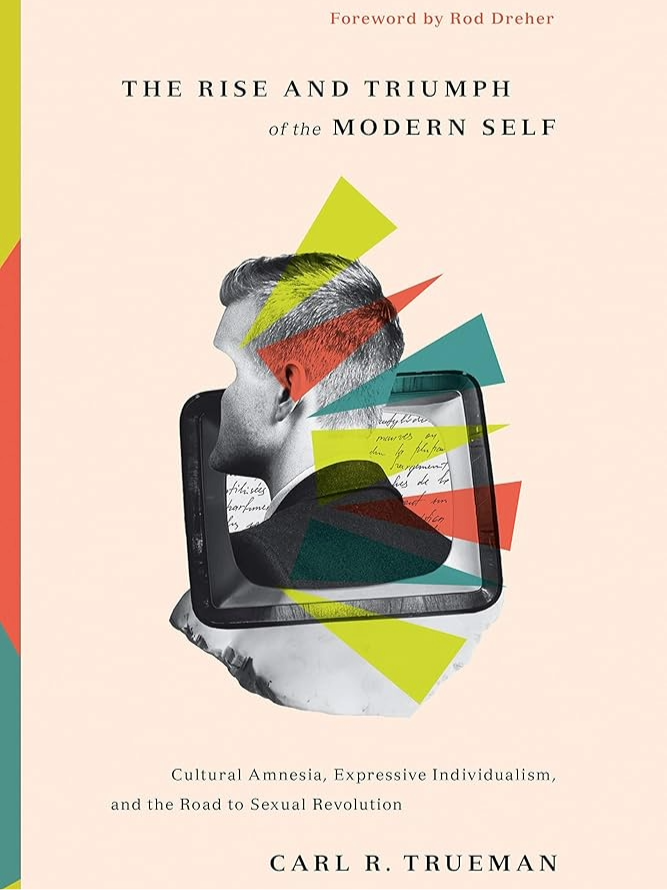
In a sophisticated survey and analysis of cultural history, Carl Trueman’s The Rise and Triumph of the Modern Self takes us through an intellectual genealogy to understand how the statement “I am a woman trapped in a man’s body,” became coherent and meaningful in contemporary culture.
In 400 pages, the professor, both an orthodox Christian and a pastor argues that today’s sexual and moral revolution is the fruit of Western society’s predominant pathologies, which are the product of an older, metaphysical revolution. How did something inconceivable to previous generations become so popular, so quickly?
At the heart of his understanding of social change are three philosophers: Philip Rieff, Charles Taylor, and Alasdair MacIntyre. Exposing their works introduces the reader to concepts such as ‘the triumph of the therapeutic,’ ‘psychological man,’ ‘anti-culture,’ and ‘social imaginary.’ Through them, we see the ascendant individualistic strain in contemporary culture hence able to understand the historical developments that have shaped our culture’s sense of self and sexuality.
The author then argues that Rousseau, Nietzsche, Marx, and Darwin provided a conceptual justification to peel God away from culture and make people the center of the universe. They often painted the Church as oppressive, preventing people from expressing their true selves. “… it is in the affirmation of free love and rejection of institutionalized religion that true liberty and personal authenticity are to be found.”(157)
He turns to Freud, through whom psychology was sexualised, and his followers, through whom sexuality was politicised. To buy into this sexual narrative is to buy into two inconsistent notions: that sexual desire constitutes our identity; and that sexual activity is nothing more than recreation, the morality of which is not intrinsic to the act but merely determined by the giving or withholding of consent. Neither of these is compatible with the Christian notion of human personhood.
Trueman draws together the many threads of his argument in a chilling manner to bring insights that bear on contemporary development. He argues that the triumph of transgenderism is the culmination of the modern self: radical autonomy, total mastery of nature, full expression of the emotive individual, the elevation of psychological man, and the transcendence of history. This is the delusion that our identities can be made and remade at will according to our emotional needs.
Trueman offers his readers the fruit of careful reading, and he writes charitably throughout. One appreciates the breadth of liberal learning required to write such a book. However, should Trueman have referred to the postmodern self instead of the modern self in the title? The title’s wording does not hobble the book, but it does leave me wondering. I can not emphasize strongly enough how practical this book is and how useful it will be to pastors, priests, and intellectually engaged Christians of all denominations.